Configures your audio player…
Could a second Sphinx be buried under the sands of Egypt’s famous ancient site? A team of Italian explorers using the latest radar technology claim to have discovered a huge underground fault in the Giza Plateau that reveals the image of the Great Sphinx. The announcement has sparked heated debate, with some researchers hailing it as a possible move and leading Egyptologists dismissing it as unsupported speculation. The debate gets to the heart of the eternal question: how much of ancient Giza is still buried beneath the sand?
Discovering a Subterranean Anomaly
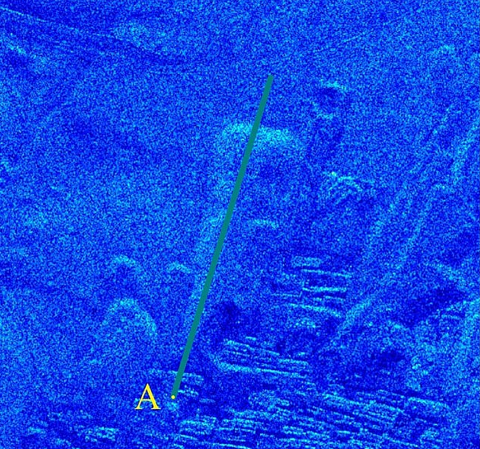
The bold claims come from the Khafre Research Project, led by radar engineer Filippo Biondi and his colleagues. Using Synthetic Aperture Radar (SAR) Doppler tomography, the team analyzed the different types of subsurface throughout the ancient region. According to reports from the New York Post, Biondi said that the radar equipment revealed structured geometric shapes and deep chambers. The data suggest the existence of a dense underground megastructure with vertical shafts and interconnected passages.
The first findings from the Giza Plateau were presented by Filippo Biondi, who claimed to have captured a structure containing the mirror of the Great Sphinx. (Filippo Biondi/The Khafre Project)
At the heart of their theory is the discovery of a 108-meter-tall mound made of hard sand, which researchers believe hid the monument. Biondi claims that the original Sphinx rested in a shallow depression, making it possible for the twin to be buried under this high mound. The team reported a precise geometric relationship between the visible pyramids and the second suspected monument, suggesting a deliberate archaic design. Biondi expressed great confidence in the data, saying that the architectural network reflects the texts found under the famous Sphinx, reports the Daily Mail.
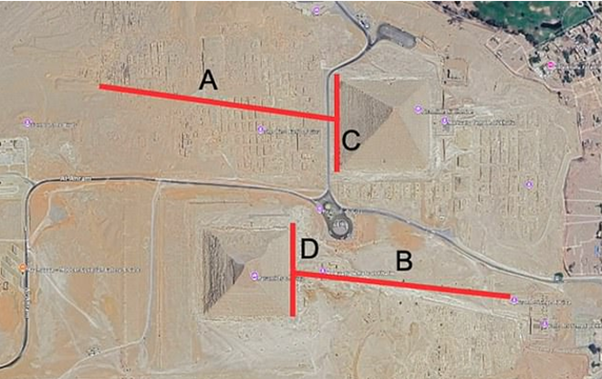
The researchers of The Khafre Project say that the second sphinx is under the sand dune where A is shown, next to the Great Sphinx shown as B (Filippo Biondi / The Khafre Project)
The Dream Stele and Ancient Inventions
To support their technological findings, the research team points to ancient Egyptian artifacts and myths. The main evidence cited is the Dream Stele, a granite slab erected by Pharaoh Thutmose IV between the legs of the Great Sphinx of Giza. The stone is famously carved with two mythical creatures, which some interpret as a sign that two such statues were originally built. This painting of two portraits has long fueled speculation among some historians about the lost spouse of the portrait’s keeper.
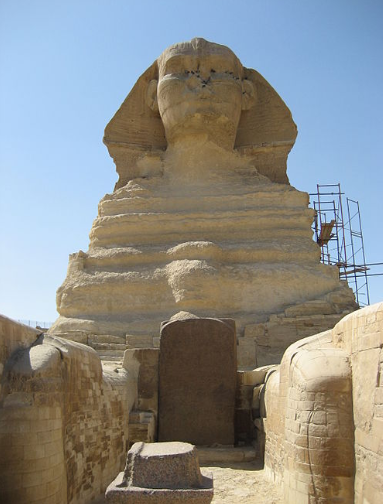
The Dream Stele of Thutmose IV is between the bridges of the Great Sphinx. (Chanel Wheeler/CC BY-SA 2.0)
The idea of undiscovered buildings in Giza is not new at all, as ancient writings and reports have been about hidden places. The Greek historian Herodotus wrote about the great labyrinth of the Egyptians, while esoteric traditions speak of the legendary Hall of Records that preserves ancient knowledge. In addition, Egyptologist Bassam El Shammaa once suggested the existence of a second Sphinx, claiming that it was destroyed by a lightning strike based on mythological texts. These durable records provide a strong background for the latest radar flaw discovered by the Italian team.
Expert Doubts and the Need for Excavation
Despite the excitement generated by the satellite image, the archaeological community has responded with great attention and criticism. Famous Egyptian scholar Zahi Hawass has firmly rejected the claims of a second Sphinx and an underground city as baseless lies. He emphasized that the extensive excavations of the Giza Plateau over decades have not provided evidence of such monumental structures. Experts argue that radar data alone is not enough to confirm the presence of man-made monuments, since natural structures can produce the same differences as underground.
Radar experts have also pointed out the inherent difficulties in interpreting deep underground signals without a physical connection. Experts warn that remote sensing requires systematic excavation to confirm any findings, and errors must be handled carefully.
Hawass was particularly pointed in his criticism, stating that the rumors about the pillars under the Pyramid of Khafre are:
“nothing but tricks spread by people who have no knowledge of ancient Egyptian civilization or the history of the pyramids.”
An Italian investigative team is reportedly awaiting permission from Egyptian authorities to conduct further physical investigations.
What’s Next?
The debate over the second Sphinx raises broader questions about how new technologies should be used in archeology and how applications should be communicated to society. Remote sensing tools such as SAR Doppler tomography have really advanced the field, helping to identify excavation targets in locations around the world. However, as this case shows, the jump from the underground problem to the publication of the second Sphinx is a significant one, and the lack of peer-reviewed publications has led to criticism from the scientific community. Until the underground chamber or monument is uncovered, the existence of the second Sphinx remains a mysterious but unproven theory.
The Giza Plateau has surprised archaeologists in recent years, with the discovery of a hidden soul and new passages inside the pyramid complex. Regardless of whether the second Sphinx eventually emerges from the sand, the renewed focus on what may lie beneath Giza is a reminder that the ancient world still has secrets to uncover. Biondi and his team are continuing to analyze their data and have expressed hope that the Egyptian authorities will grant permission to conduct research in the area. For now, the world is watching and waiting.
Image above: The Great Sphinx of Giza with the Pyramid of Khafre in the background. Source: Dénes Emőke / CC BY-SA 4.0enter; Filippo Biondi/The Khafre Project
By Gary Styles
References
Costs, B. 2026. Researchers discover a second Sphinx under the Pyramids of Giza. Available at: https://nypost.com/2026/03/27/science/researchers-detect-second-sphinx-beneath-pyramids-of-giza/
Grace, M. 2026. Radar raises debate about second Sphinx beneath Giza plateau. Available at: https://euroweeklynews.com/2026/03/27/radar-scans-spark-debate-over-possible-second-sphinx-beneath-giza-plateau/
Sisodia, S. 2026. Expert Rejects Claims of Second Sphinx Discovery Under Giza Pyramids. Available at: https://www.ndtv.com/feature/expert-rejects-claims-of-second-sphinx-discovery-beneath-giza-pyramids-11283501
Wellbank, L. 2026. The Second Sphinx and a Possible Megastructure in Egypt. Available at: https://parade.com/news/second-spinx-and-mega-structure-possibly-found-in-egypt
#Argument #rages #Sphinx #Giza