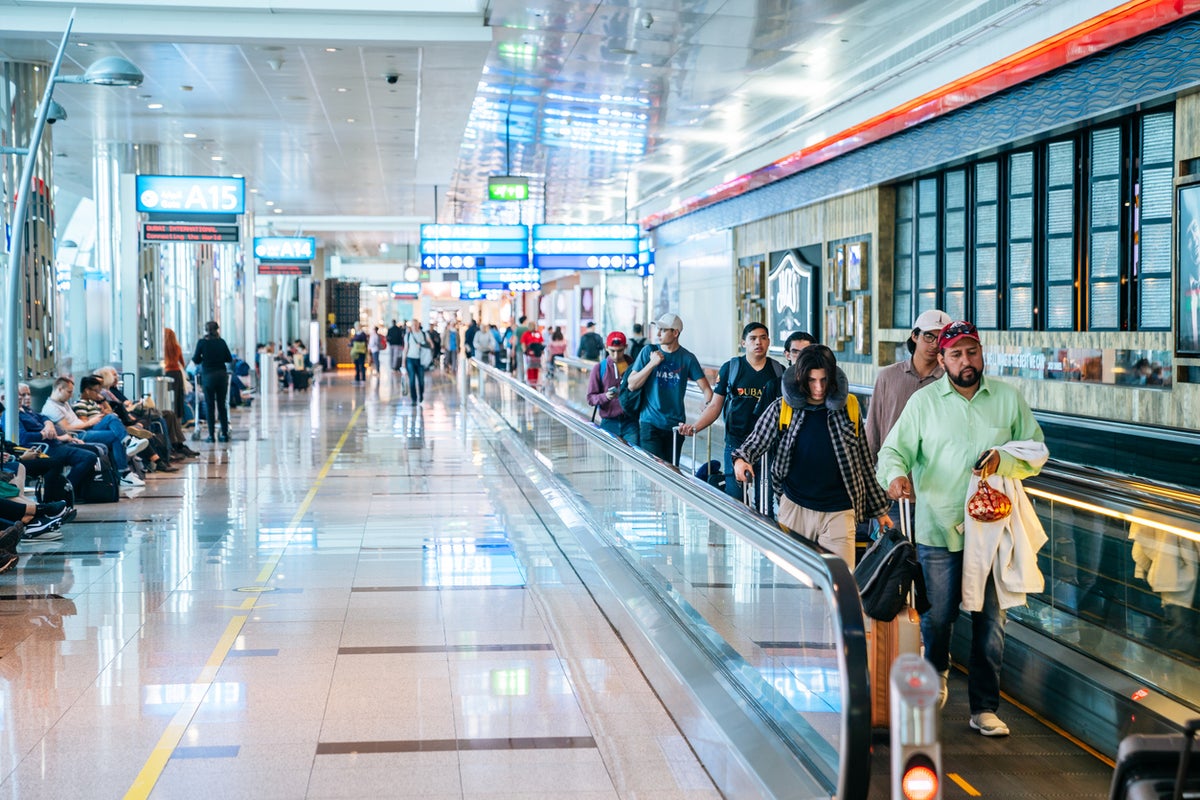
Flights from the United Arab Emirates (UAE) to the UK are steadily increasing, meaning Britons have more business options to get out of the country.
Those still in the UAE have been warned that the Iranian government has announced its intention to target US and Israeli-linked businesses, services and institutions.
Since the outbreak of war, 11 people have been killed in Iranian attacks on the UAE, including two soldiers, according to the country’s authorities, while more than 2,000 drone and missile attacks have been reported.
The temporary closure of the airport earlier this month grounded flights and severely disrupted travel plans in the UAE.
The UK Foreign Office (FCDO) has advised against all but essential travel to the UAE as the regional expansion poses “significant security risks”.
Here’s the latest travel advice for the UAE, along with some important questions and answers.
Read more: LIVE: The latest Iran-US war
Is it safe to travel to UAE?
The UK Foreign Office advises against all but essential travel to the UAE as the expansion of the zones “poses significant security risks and has caused disruption to travel”.
What is the government’s advice if you are already there?
British residents in the UAE, including Dubai and Abu Dhabi, have been told they can register their presence for updated information.
The FCDO said that the Iranian regime “has publicly stated its intention to target areas linked to the United States and Israel. This includes organizations linked to the US or Israel, businesses, facilities and organizations”.
People are advised to stay away from areas near security or military facilities, and areas associated with the US or Israel.
“Iran continues to hit public infrastructure across the region, such as ports, hotels, roads, bridges, energy facilities, financial institutions, oil production facilities, water systems and airports,” the FCDO said.
It advises to follow the instructions of the local authorities and to monitor the local and international media for the latest information. Britons should read the FCDO crisis abroad guide and sign up for travel advice email alerts.
The FCDO also advises that “if local authorities advise you to protect yourself, stay indoors or move to the nearest safe building immediately.”
The biggest danger is from debris falling from cables, and you are safest in a secure building.
It asks people to limit essential travel, and if travel is unavoidable, travel during the day, avoid crowded areas, keep your cell phone charged, and let friends or family know where you are going.
“If you are away from your home or hotel, and an attack occurs or you receive an alert from the UAE’s warning system, seek shelter in the nearest building immediately,” he adds.
The British Embassies in Abu Dhabi and Dubai “continue to operate as normal”.
Visitors are also reminded that it is illegal to post material, including videos and photos, online that “criticize the UAE government, companies or individuals, or relate to events in the UAE”, following the arrest of a British man in Dubai after allegedly filming the missiles.
Do flights go to Dubai and Abu Dhabi?
FCDO said commercial flights to the UK from the UAE have resumed.
A recent update from Dubai International Airport (DXB) said: “Dubai Airport confirms the gradual resumption of additional flights to and from Dubai International (DXB) to selected destinations.”
DXB told travelers to “check with their airlines for the latest information on their travel”.
A statement from Zayed International said: “Passengers are advised not to proceed to the airport unless they have a confirmed ticket and are specifically advised to do so by their airline.
The UAE’s flag carrier Emirates is currently operating a reduced flight schedule following the reopening of regional airspace.
Emirates said in the update: “We continue to monitor the situation and will update our operating schedule accordingly. We would like to thank you for your understanding and patience.
“The safety and security of our passengers and crew remains our top priority and will not be compromised.”
Customers booked for travel between 28 February to 30 April will be refunded on the next Emirates flight in the event of a disruption.
Under air passenger rights laws, passengers have the right to be flown to their destination as soon as possible on any aircraft with seats.
How do I get home from the UAE?
According to the FCDO: “If your presence in the UAE is not necessary, you may wish to consider traveling – if you judge that you can access these options safely. Check the latest information from your airline or tour operator, as well as instructions from the local authorities, and the status of any border crossing before leaving.
If you are traveling by air, do not go to the airport unless your airline has confirmed your reservation.
The Foreign Office adds that traveling “into or out of the UAE is at your own risk”.
British citizens trying to travel through Saudi Arabia with emergency travel documents should call the embassy in Riyadh or Jeddah for advice.
Can I cancel my holiday in the UAE?
If you decide to cancel your flight ticket, holiday, tour or trip to the UAE, talk to your travel agent. As the FCDO advises against all but essential travel – urgent family or business commitments – to the UAE, you may be able to cancel your package holiday without penalty for a full refund. Package holidays must comply with the Package Travel Arrangements Regulations 2018, and refunds are given if there has been a “substantial change to the destination” prior to travel. Your travel insurance may not be valid if you travel against advice from the FCDO.
Read more: Middle East aviation crisis: 11 answers travelers need as war with Iran continues to bring travel chaos
#safe #travel #Dubai #Abu #Dhabi #latest #UAE #travel #advice